Introduction
Suspended platforms are widely used for building maintenance, facade cleaning, painting, repair, and other work at height. Two common options are pedal rope suspended platforms and motorized suspended platforms.
Both systems can serve different requirements. The better choice depends on factors such as building height, frequency of use, workload, operating requirements, and budget.
Understanding the differences can help contractors and facility managers select suitable equipment.
What Is a Pedal Rope Suspended Platform?
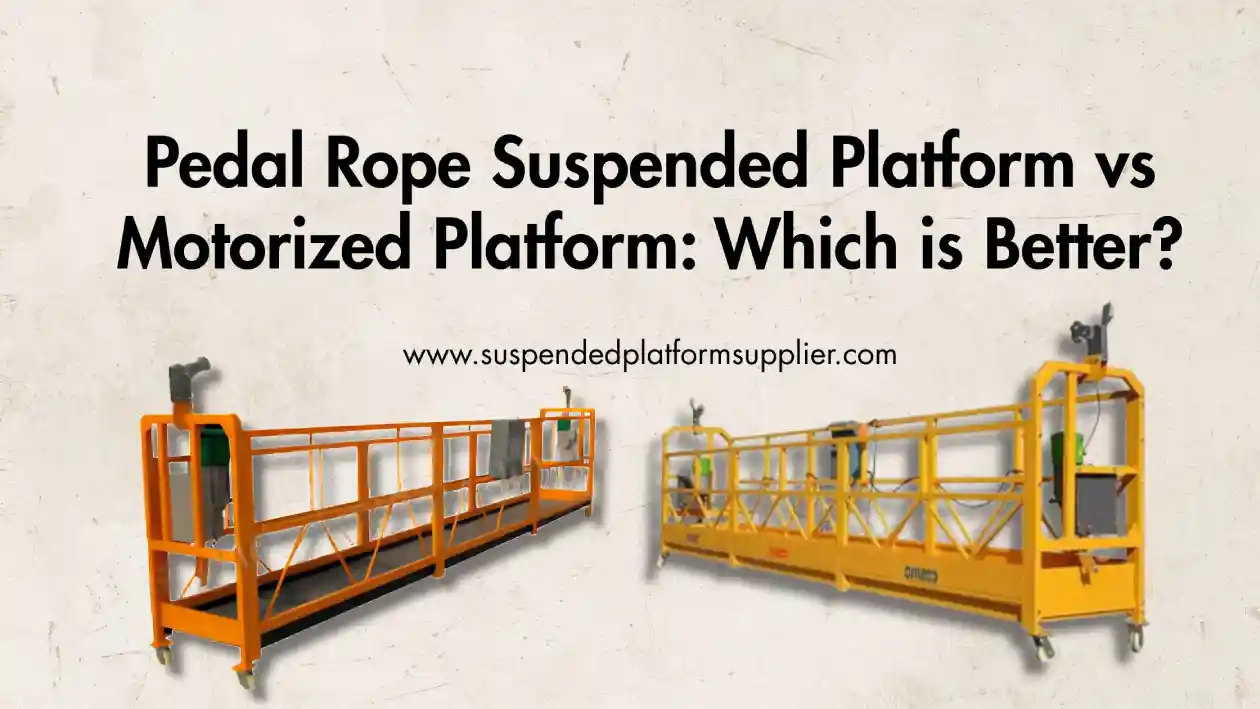
A pedal rope suspended platform uses a manually operated pedal mechanism to move the platform along the suspension ropes.
It can be considered for applications where:
- Equipment use is occasional
- Manual operation is acceptable
- Lower initial investment is preferred
- The work involves relatively smaller requirements
Its mechanical design can also make the system comparatively straightforward to operate and maintain, subject to the manufacturer’s specifications and safety requirements.
What Is a Motorized Suspended Platform?
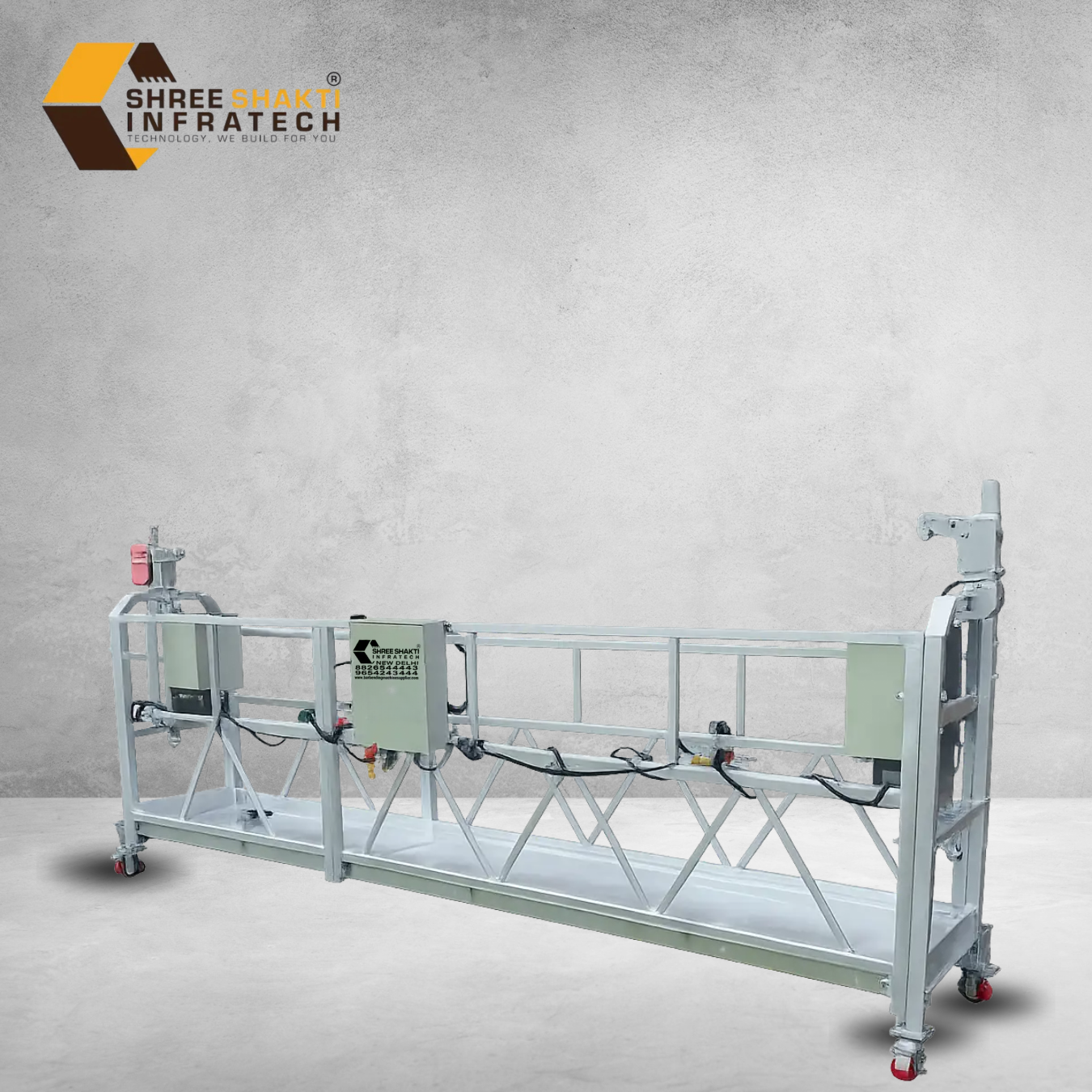
A motorized suspended platform uses powered hoists to raise and lower the working platform.
It is generally better suited to projects where workers need to move vertically more frequently or where productivity is an important consideration.
Typical applications include:
- High-rise building maintenance
- Exterior painting
- Facade cleaning
- Window cleaning
- Building repairs
- Construction and finishing work
Key Differences
| Feature | Pedal Rope Platform | Motorized Platform |
|---|---|---|
| Operation | Manual pedal mechanism | Electric/powered hoist |
| Initial Cost | Generally lower | Generally higher |
| Operating Effort | Higher | Lower |
| Vertical Movement | Manual | Powered |
| Productivity | Suitable for smaller workloads | Better for frequent operation |
| Maintenance | Relatively simple | Requires motor/hoist maintenance |
| Best For | Occasional or lighter applications | Regular and demanding applications |
1. Ease of Operation
A pedal rope platform requires the operator to manually operate the mechanism to move the platform.
A motorized platform uses powered hoists, reducing physical effort during vertical movement.
For long-duration or frequent facade work, motorized operation can therefore provide greater convenience.
2. Productivity
Productivity is an important factor for commercial projects.
Pedal-operated systems may be suitable when vertical movement is limited. However, motorized platforms can make repeated movement between different building levels more convenient.
For contractors handling large projects or frequent maintenance work, this can be a significant advantage.
3. Initial Investment
Pedal rope suspended platforms can be attractive when the primary consideration is initial equipment cost.
Motorized platforms generally involve additional components such as:
- Electric motors
- Powered hoists
- Control systems
- Electrical connections
Therefore, their initial investment can be higher.
However, businesses should evaluate the total cost over the equipment’s expected working life rather than comparing purchase price alone.
4. Maintenance Requirements
Both systems require regular inspection and maintenance.
A pedal rope platform has fewer powered components, which can make its mechanical maintenance relatively straightforward.
Motorized platforms require attention to components such as:
- Motors
- Hoists
- Controls
- Electrical connections
- Safety devices
Maintenance should always follow the manufacturer’s instructions and applicable safety requirements.
5. Building Height and Workload
For occasional work on smaller or moderately sized buildings, a pedal system may be considered where its specifications are appropriate.
For high-rise buildings and projects involving frequent vertical movement, a motorized platform may offer greater practicality and productivity.
The final selection should be based on the manufacturer’s rated capacity, working height, suspension arrangement, and application requirements.
6. Worker Effort
Manual operation naturally requires greater physical effort from workers.
Motorized platforms reduce the effort required to move the working platform vertically.
This can be particularly useful when workers spend extended periods on the platform or when the equipment needs to move repeatedly throughout the working day.
7. Application Suitability
Pedal Rope Suspended Platforms
These may be suitable for:
- Occasional maintenance
- Small-scale painting
- Cleaning work
- Repair activities
- Applications where manual operation is acceptable
Motorized Suspended Platforms
These are generally more suitable for:
- High-rise buildings
- Regular facade maintenance
- Large painting projects
- Commercial building maintenance
- Frequent vertical movement
Which One Should You Choose?
There is no single answer for every project.
Choose a pedal rope suspended platform when manual operation, simpler mechanical construction, and lower initial investment align with the project’s requirements.
Choose a motorized suspended platform when productivity, reduced physical effort, frequent movement, and higher operational convenience are priorities.
For demanding commercial and high-rise applications, motorized systems are often the more practical option, provided the equipment is correctly specified and operated.
What Should Buyers Check?
Before purchasing a suspended platform, consider:
- Maximum working load
- Platform dimensions
- Working height
- Suspension system
- Rope specifications
- Hoist mechanism
- Safety devices
- Emergency arrangements
- Platform construction
- Maintenance requirements
- Spare-parts availability
- Manufacturer support
- Applicable safety standards
For work at height, equipment should be selected, installed, inspected, and operated according to applicable regulations and manufacturer instructions.
Why Choose an Experienced Suspended Platform Manufacturer?
The manufacturer plays an important role in equipment quality and long-term support.
Businesses should evaluate:
- Manufacturing experience
- Product quality
- Platform design
- Safety features
- Customization options
- Testing and inspection
- Spare-parts support
- Technical assistance
- After-sales service
Shree Shakti Infratech can be evaluated based on the specific suspended-platform model, technical specifications, safety features, and project requirements before purchase.
Conclusion
Both pedal rope and motorized suspended platforms have their own advantages.
A pedal rope system may be suitable for applications where manual operation and a simpler setup meet the project’s requirements. A motorized platform can provide greater convenience and productivity for frequent or demanding facade-access work.
The right choice ultimately depends on building height, workload, frequency of use, operating conditions, budget, and required productivity.
Before purchasing, businesses should compare specifications, safety provisions, maintenance requirements, and manufacturer support to select the most suitable suspended platform for their project.