Introduction
Suspended platforms provide temporary access to elevated areas for construction, painting, facade cleaning, inspection, repairs, and building maintenance.
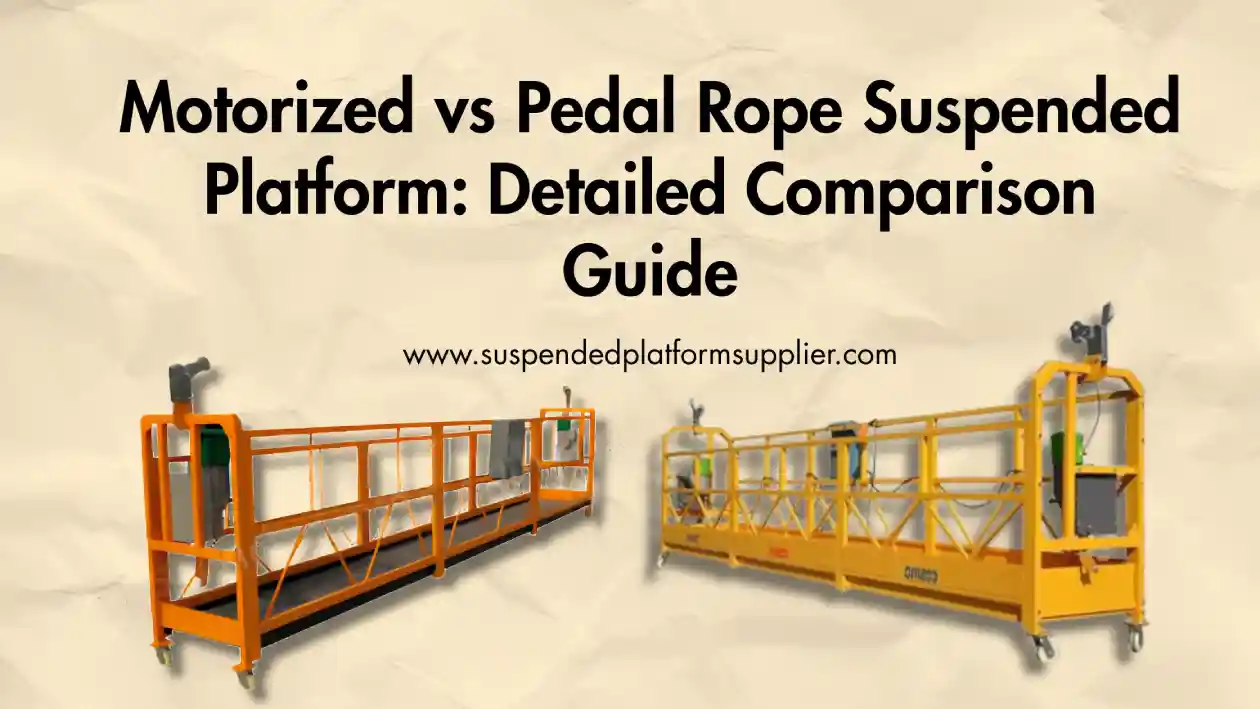
Two commonly considered options are motorized suspended platforms and pedal rope suspended platforms. While both can provide vertical access, they differ in their operating mechanism, physical effort, productivity, cost, and ideal applications.
Understanding these differences can help contractors, builders, and facility managers choose equipment that matches their project requirements.
What Is a Motorized Suspended Platform?
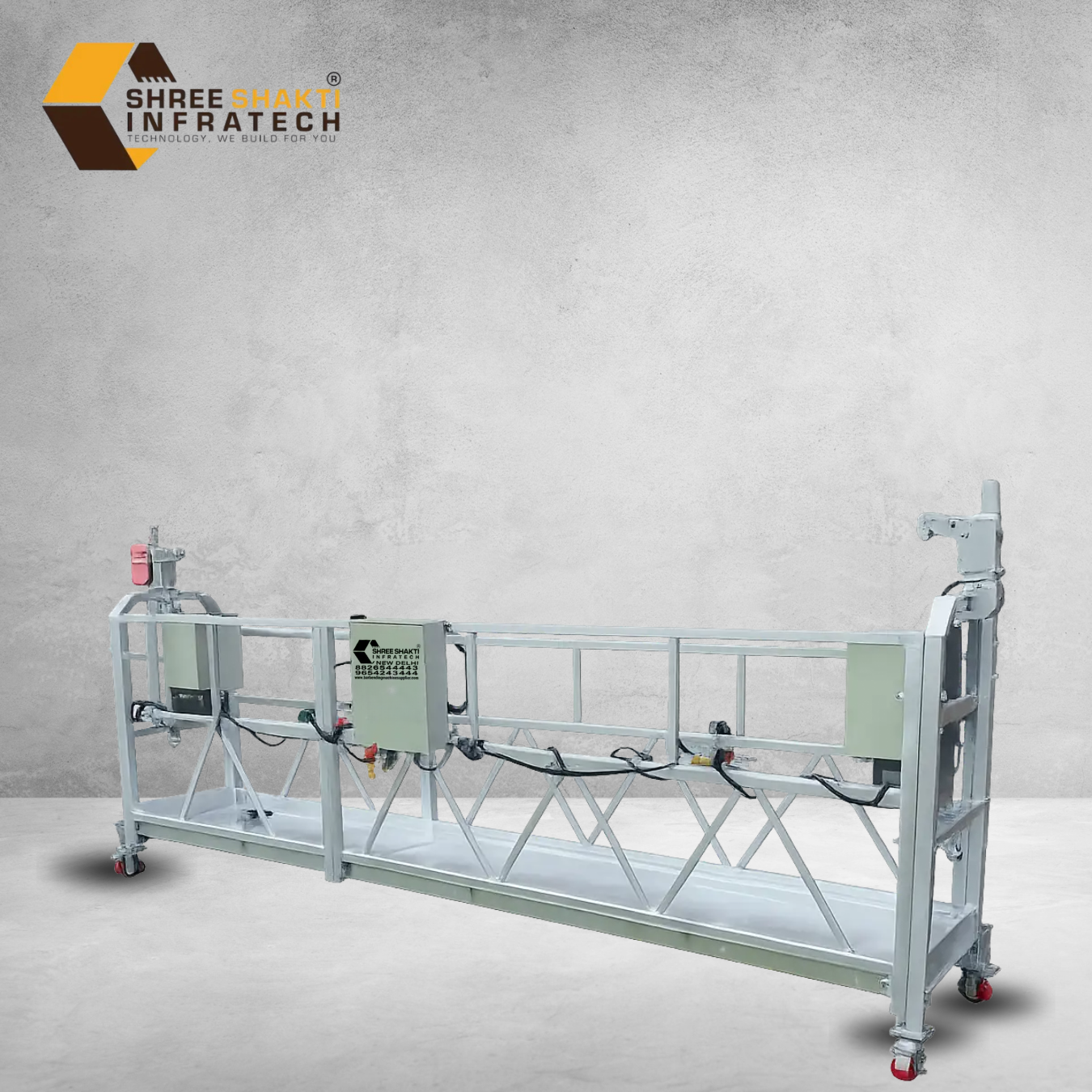
A motorized suspended platform uses powered hoists to move the working platform vertically along suspension ropes.
Depending on the design, it can include:
- Electric hoists
- Working platform
- Suspension system
- Wire ropes
- Control system
- Guardrails
- Safety devices
Motorized platforms are commonly considered for projects requiring frequent vertical movement and longer operating periods.
What Is a Pedal Rope Suspended Platform?
A pedal rope suspended platform uses a manually operated pedal mechanism to move the platform.
It may be considered for smaller or occasional applications where powered equipment is not essential.
Typical applications can include:
- Small painting projects
- Building maintenance
- Cleaning
- Minor repairs
- Waterproofing
- Inspection
The suitability depends on the platform’s rated capacity, working height, suspension arrangement, and manufacturer specifications.
Motorized vs Pedal Rope: Key Differences
| Feature | Motorized Platform | Pedal Rope Platform |
|---|---|---|
| Operation | Electric/powered | Manual pedal |
| Physical Effort | Lower | Higher |
| Productivity | Generally higher | Suitable for smaller workloads |
| Initial Cost | Generally higher | Generally lower |
| Power Supply | Required | Not required for movement |
| Frequent Movement | More convenient | More physically demanding |
| Large Projects | Better suited | Less suitable |
| Small Projects | May be suitable | Often practical |
| Maintenance | Includes motor/hoist components | Mainly mechanical components |
1. Operating Mechanism
The most obvious difference is how the platform moves.
A motorized system uses powered hoists to raise and lower the platform.
A pedal rope system requires manual operation of the pedal mechanism.
For projects involving repeated vertical movement, powered operation can significantly reduce physical effort.
2. Productivity
Productivity is particularly important for commercial construction and maintenance projects.
Motorized platforms can allow operators to move the platform efficiently between different working levels.
Pedal systems require manual effort for movement, making them more suitable for smaller projects or applications where vertical repositioning is less frequent.
If a contractor needs to work across a large facade throughout the day, a motorized system may provide greater operational convenience.
3. Physical Effort
Pedal rope platforms require workers to operate the lifting mechanism manually.
This can increase physical effort, particularly during prolonged work.
Motorized platforms reduce the effort required for vertical movement because the hoist provides the lifting force.
For longer projects, this can be an important consideration when evaluating equipment.
4. Initial Investment
Pedal rope platforms generally have a lower initial equipment cost because they do not require powered hoists and associated electrical components.
Motorized platforms can have a higher purchase price because they include:
- Electric motors
- Powered hoists
- Control systems
- Electrical components
- Additional safety equipment
However, buyers should compare total project costs rather than purchase price alone.
5. Power Requirements
A motorized suspended platform requires an appropriate electrical power supply.
Before purchasing, businesses should confirm:
- Voltage
- Power requirements
- Electrical connections
- Generator compatibility, if applicable
- Site power availability
A pedal rope platform does not depend on electrical power for vertical movement, which can be useful at sites with limited power access.
6. Maintenance
Both systems require regular inspection and maintenance.
Motorized Platform
Maintenance may include:
- Motor inspection
- Hoist maintenance
- Electrical checks
- Wire-rope inspection
- Safety-device inspection
- Control-system checks
Pedal Rope Platform
Maintenance generally focuses on:
- Pedal mechanism
- Ropes
- Platform structure
- Guardrails
- Suspension components
- Mechanical connections
The manufacturer’s maintenance schedule should always be followed.
7. Project Size
The scale of the project is an important selection factor.
Pedal Rope Platforms
May be appropriate for:
- Small buildings
- Short-duration projects
- Occasional maintenance
- Small painting jobs
- Limited vertical movement
Motorized Platforms
Often more suitable for:
- High-rise buildings
- Large commercial projects
- Industrial facilities
- Extensive facade painting
- Regular building maintenance
8. Working Height
Working height should always be checked against the manufacturer’s rated specifications.
For taller buildings where workers need to move repeatedly between multiple levels, a motorized platform can provide greater convenience.
Pedal systems may be suitable for lower or less demanding applications where manual operation is practical.
The building’s structure and suspension arrangement must also be assessed.
9. Safety Considerations
Neither manual nor motorized operation automatically makes a platform safe.
Safety depends on:
- Correct installation
- Rated load capacity
- Structural integrity
- Proper suspension
- Wire-rope condition
- Guardrails
- Safety devices
- Operator training
- Regular inspection
Motorized platforms may incorporate additional safety mechanisms associated with powered hoists, while pedal systems rely on their mechanical design and specified safety arrangements.
All work-at-height equipment should be operated according to manufacturer instructions and applicable regulations.
10. Which Platform Is More Flexible?
A motorized platform generally provides greater operational flexibility when frequent vertical repositioning is required.
A pedal rope platform can provide a simpler solution where:
- Work is occasional
- Project size is small
- Power is unavailable
- Manual operation is acceptable
The better option depends on the actual work pattern.
When Should You Choose a Motorized Platform?
A motorized platform may be the better choice when:
- The project is large
- The building is tall
- Frequent vertical movement is required
- Productivity is a priority
- Workers need reduced physical effort
- The platform will be used regularly
When Should You Choose a Pedal Rope Platform?
A pedal rope platform may be considered when:
- The project is relatively small
- Initial equipment cost matters
- Manual operation is acceptable
- Electrical power is unavailable or inconvenient
- Vertical movement is limited
- The equipment will be used occasionally
What Should Buyers Check?
Before purchasing either system, compare:
- Platform dimensions
- Rated working load
- Working height
- Suspension arrangement
- Wire-rope specifications
- Hoist mechanism
- Power requirements
- Safety devices
- Emergency arrangements
- Platform material
- Maintenance requirements
- Spare-parts availability
- Warranty
- Technical support
These factors can help businesses avoid choosing equipment based solely on price.
Choosing the Right Suspended Platform Manufacturer
The manufacturer’s capabilities can significantly affect the quality and long-term usability of the equipment.
Buyers should evaluate:
- Manufacturing experience
- Structural design
- Material quality
- Hoist quality
- Safety systems
- Load capacity
- Testing and inspection
- Customization
- Spare-parts availability
- Technical assistance
- After-sales support
Shree Shakti Infratech can be evaluated based on the specifications and safety features of its suspended platform solutions and their suitability for the intended construction or maintenance application.
Quick Decision Guide
| Project Requirement | Recommended Option |
| Small maintenance job | Pedal rope |
| Occasional use | Pedal rope |
| No electrical power | Pedal rope |
| High-rise facade work | Motorized |
| Frequent vertical movement | Motorized |
| Large painting project | Motorized |
| Reduced physical effort | Motorized |
| Lower initial investment | Pedal rope |
Conclusion
Motorized and pedal rope suspended platforms are designed for different operating requirements.
A motorized suspended platform can be a practical choice for high-rise, large-scale, and frequent facade work where productivity and reduced physical effort are important.
A pedal rope suspended platform can be considered for smaller, occasional, or simpler projects where manual operation and lower initial investment are priorities.
Before making a decision, contractors should evaluate building height, workload, frequency of use, power availability, load capacity, safety features, maintenance, and total project cost.
For businesses sourcing this equipment, selecting a reliable Suspended Platform Manufacturer such as Shree Shakti Infratech should involve comparing verified technical specifications, safety provisions, customization options, and after-sales support.