Introduction
Suspended platforms are commonly used for work at height, including building construction, facade cleaning, painting, repairs, inspection, and maintenance. Depending on the project, businesses may consider different platform configurations, including cradle suspended platforms and rope platforms.
Although both provide elevated access, their design, operation, capacity, and applications can differ.
Understanding these differences helps contractors, builders, and facility managers select equipment that matches their project requirements.
What Is a Cradle Suspended Platform?
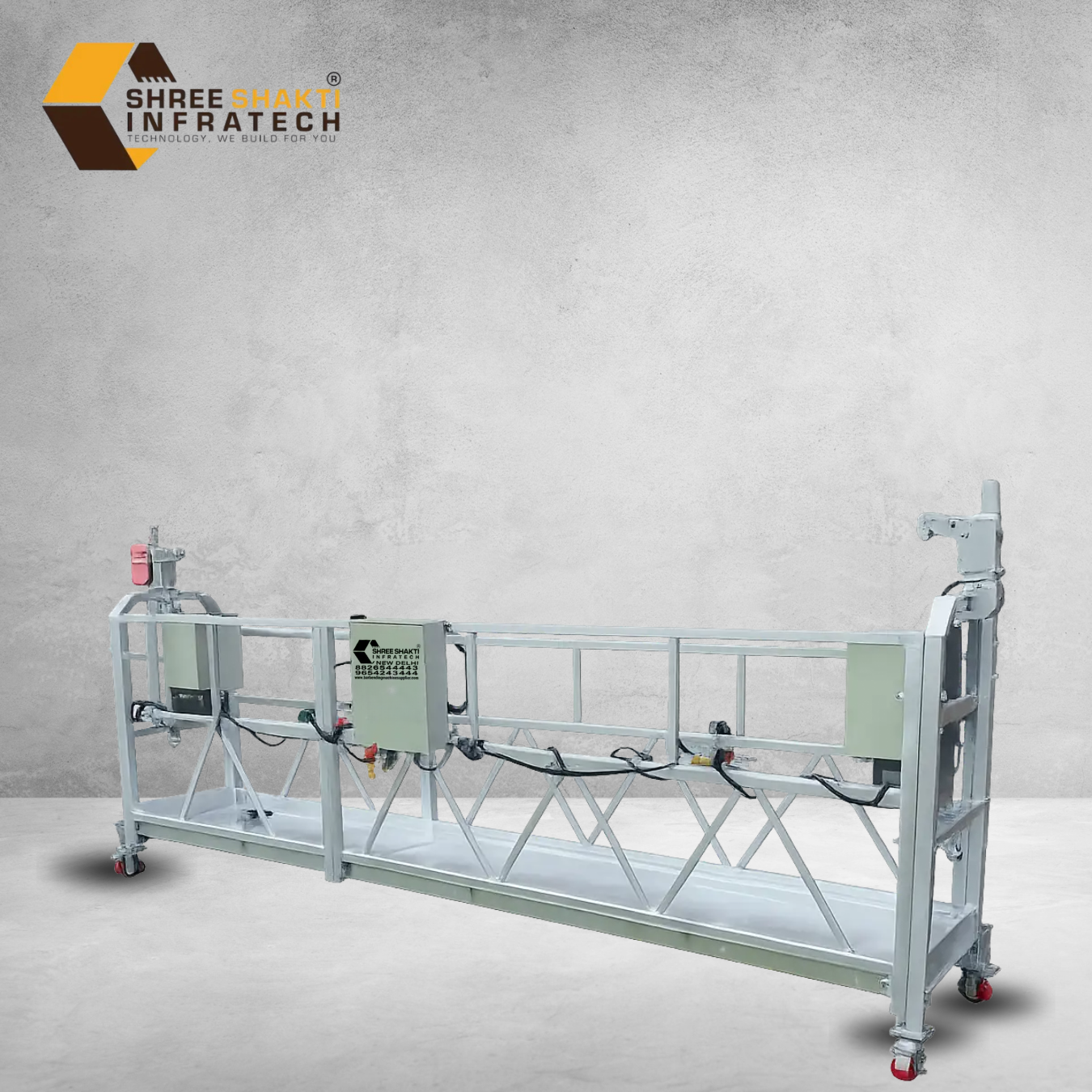
A cradle suspended platform is a working platform that hangs from an overhead suspension system using wire ropes and suitable hoisting equipment.
The cradle provides a defined working area where operators can perform tasks along a building facade.
Common applications include:
- High-rise building maintenance
- Exterior painting
- Facade cleaning
- Window cleaning
- Repair work
- Waterproofing
- Inspection
Depending on the configuration, cradle systems can be manually or electrically operated.
What Is a Rope Platform?
A rope platform generally refers to a suspended working platform that relies on ropes as part of its suspension and movement system.
The exact configuration can vary depending on the equipment design. Rope-based systems may be used for lighter or specialized access requirements where the platform, suspension arrangement, and lifting mechanism are appropriately matched to the work.
Before purchasing, buyers should confirm the manufacturer’s rated capacity and intended application.
Cradle vs Rope Platform: Key Differences
| Feature | Cradle Suspended Platform | Rope Platform |
|---|---|---|
| Structure | Defined suspended working cradle | Rope-based suspended arrangement |
| Working Area | Generally broader | Depends on design |
| Movement | Manual or powered depending on model | Depends on lifting arrangement |
| Applications | Construction and building maintenance | Suitable applications based on system design |
| Capacity | Model-specific | Model-specific |
| High-Rise Use | Commonly used | Depends on configuration |
| Customization | Available with suitable manufacturers | Depends on manufacturer |
| Best For | Regular facade access | Specialized or lighter access requirements |
1. Working Platform Design
A cradle provides a structured working area with a platform and protective guardrails.
This can be useful when workers need space for tools and equipment while carrying out facade work.
Rope-based platforms can have different configurations depending on their intended use.
For professional construction and maintenance, buyers should focus on the platform dimensions, load capacity, guardrails, suspension arrangement, and safety provisions rather than the name alone.
2. Load Capacity
Load capacity is an important factor in work-at-height equipment.
The required capacity depends on:
- Number of workers
- Tools
- Equipment
- Materials
- Platform weight
A larger cradle may be suitable when several workers need to work together, while a smaller rope platform may be appropriate for specific applications.
Never exceed the manufacturer’s rated working load.
3. Ease of Movement
Cradle suspended platforms can be designed for controlled vertical movement using hoists.
This makes them useful for buildings where workers need to repeatedly access different facade levels.
Rope platforms may also provide vertical movement, depending on their lifting mechanism and configuration.
The buyer should verify the operating method and movement speed before selecting equipment.
4. High-Rise Applications
High-rise buildings often require equipment that can provide reliable vertical facade access.
Suspended cradles are widely considered for:
- High-rise painting
- Facade cleaning
- Window cleaning
- Maintenance
- Building repairs
Rope platforms can also be considered for suitable applications, but their capacity, suspension system, and operating mechanism should be carefully evaluated.
5. Installation Requirements
Both types require suitable suspension arrangements.
Depending on the system, installation may involve:
- Roof structures
- Suspension beams
- Wire ropes
- Hoists
- Counterweights
- Safety ropes
- Anchoring arrangements
The building structure must be capable of supporting the imposed loads.
Installation should be carried out according to the manufacturer’s instructions and applicable safety requirements.
6. Maintenance Requirements
Regular inspection is essential for all suspended work-at-height equipment.
Check components such as:
- Wire ropes
- Hoists
- Platform structure
- Guardrails
- Suspension components
- Safety devices
- Electrical components, where applicable
Maintenance schedules should follow manufacturer recommendations.
7. Cost Considerations
The cost of a suspended platform depends on several factors.
These include:
- Platform size
- Load capacity
- Hoist type
- Material
- Suspension system
- Safety equipment
- Customization
- Accessories
A simple rope platform may have a lower initial cost for certain applications, while a larger cradle system may require greater investment.
However, buyers should compare total lifecycle cost rather than purchase price alone.
8. Which One Is More Suitable?
A cradle suspended platform may be preferable when:
- Several workers need a defined work area
- The project involves regular facade maintenance
- Tools and equipment need to be carried
- High-rise access is required
- Controlled vertical movement is important
A rope platform may be considered when:
- The application has simpler access requirements
- A specific rope-based configuration is suitable
- Lower equipment weight is preferred
- The project requires a specialized access solution
The manufacturer’s technical specifications should determine final suitability.
9. Safety Should Be the Priority
Regardless of platform type, safety should be the first consideration.
Buyers should check:
- Rated working load
- Emergency arrangements
- Safety ropes
- Fall-protection provisions
- Hoist safety devices
- Guardrails
- Wire-rope quality
- Suspension structure
- Inspection procedures
Operators should be properly trained and follow the manufacturer’s operating instructions and applicable work-at-height regulations.
What Should Buyers Ask a Manufacturer?
Before purchasing, ask:
- What is the platform’s rated capacity?
- What is the maximum working height?
- What suspension arrangement is required?
- Which hoist system is used?
- What safety devices are included?
- What wire-rope specifications are required?
- Is customization available?
- What spare parts are available?
- What maintenance is required?
- What technical and after-sales support is provided?
These questions can help businesses compare different suspended-platform options more effectively.
Choosing the Right Suspended Platform Manufacturer
The manufacturer plays an important role in equipment quality, customization, and long-term support.
Buyers should compare:
- Manufacturing experience
- Platform construction
- Material quality
- Hoist systems
- Safety features
- Load capacity
- Testing and inspection
- Spare-parts availability
- Technical support
- After-sales service
Shree Shakti Infratech can be evaluated based on its specific suspended platform models, technical specifications, safety features, and suitability for the intended application.
Quick Comparison
| Requirement | Cradle Suspended Platform | Rope Platform |
| High-rise facade maintenance | Excellent choice | Application dependent |
| Multiple workers | Suitable with rated capacity | Depends on platform |
| Large work area | Generally better | Depends on design |
| Frequent vertical movement | Suitable | Depends on mechanism |
| Simple access work | May be suitable | May be suitable |
| Heavy equipment/tools | Depends on rated capacity | Depends on rated capacity |
| Custom configurations | Manufacturer dependent | Manufacturer dependent |
Conclusion
Cradle suspended platforms and rope platforms can both provide access for work at height, but their suitability depends on the platform design, capacity, suspension arrangement, and intended application.
A cradle platform can be a practical choice for high-rise facade maintenance, painting, cleaning, and repair work, particularly when workers require a defined working area.
A rope platform may be appropriate for specific applications where a simpler or specialized suspended arrangement meets the required specifications.
Before making a purchase, contractors should compare load capacity, platform dimensions, suspension system, hoist mechanism, safety features, maintenance requirements, and manufacturer support.
For businesses sourcing this equipment, choosing an experienced Suspended Platform Manufacturer such as Shree Shakti Infratech should be based on verified specifications and the specific requirements of the project.